
Car rental business: the website and paperwork you need
Starting a car rental business? Register it, use a rental agreement, insure every car, set deposit and mileage rules, and get a website with daily rates.

Plenty of people own a car or two they rarely use, or run a scooter shop in a tourist town, and want to start a car rental business. It is not hard, but you need two things ready: the paperwork to operate legally, and a way for renters to find you, see prices and book. This guide lists what to prepare before you hand over the first set of keys, for cars and for holiday scooters and motorbikes.
Quick summary: a car rental business needs 7 things:
- Register the business before taking customers
- A rental agreement and a handover checklist
- Paperwork and insurance for every vehicle
- Renter rules: documents, deposit, mileage
- A website with your fleet and daily prices
- A booking form that totals the price, with delivery
- Holiday motorbike rental: routes and free extras
1. Register the business before taking customers
Renting vehicles out again and again for money is a business, so register it as a sole trader or a company in your country. In the US, the Small Business Administration explains the steps to register your business; other countries have a similar official portal.
Ask your local business office two questions while you register:
- Type of rental: say whether you rent self-drive only or also offer a driver, so you get the right licence and conditions.
- Tax: ask how rental income is declared, so you know in advance what you will owe.
Once registered, you can show your business name and tax number on your website, contracts and receipts. Business travellers often ask for an invoice, so this also helps you sell more.
2. A rental agreement and a handover checklist
Every rental should have a written rental agreement signed by both sides. It covers renter details, the vehicle and its condition, pick-up and return times, price, deposit, mileage limit, late fees, and who pays for damage, tolls and traffic fines.
 Handing over the key is when both sides check the car and sign the checklist. Photo: Kaboompics (CC0).
Add a handover checklist: photograph all four sides, the interior, the odometer and the fuel gauge at pick-up, then send the photos to the renter by WhatsApp. On return, compare photos to spot new scratches and avoid arguments. Have a lawyer look over your template once before you use it.
3. Paperwork and insurance for every vehicle
Each rental car needs valid papers so renters are not stopped on the road: registration, a roadworthiness or inspection certificate where your country requires one, and the compulsory liability insurance.
Standard private insurance often does not cover cars used for rental. Ask your insurer for a commercial or rental policy that covers damage to the car, and check what the renter’s excess is. Write it on your website, for example “all cars insured, your excess is at most …”, so renters feel safe.
4. Renter rules: documents, deposit, mileage
Clear written rules let you answer fast and treat every renter the same. A good set covers:
- Documents: passport or ID, a valid driving licence for the right class; visitors may also need an International Driving Permit.
- Deposit: how much, cash, transfer or card hold, and when it is returned.
- Mileage limit: for example 300 km a day with a fee per extra km; long rentals can be unlimited.
- Fuel, late returns, cleaning: same fuel level back, the fee for late returns, a cleaning fee for very dirty cars.
Add “documents and deposits follow our shop rules” so renters understand these are your own conditions, which may vary by car.
5. A website with your fleet and daily prices
Travellers search for “car rental” plus the city or airport name. To be chosen, your page must answer three questions at once: which cars, how much, how to book.
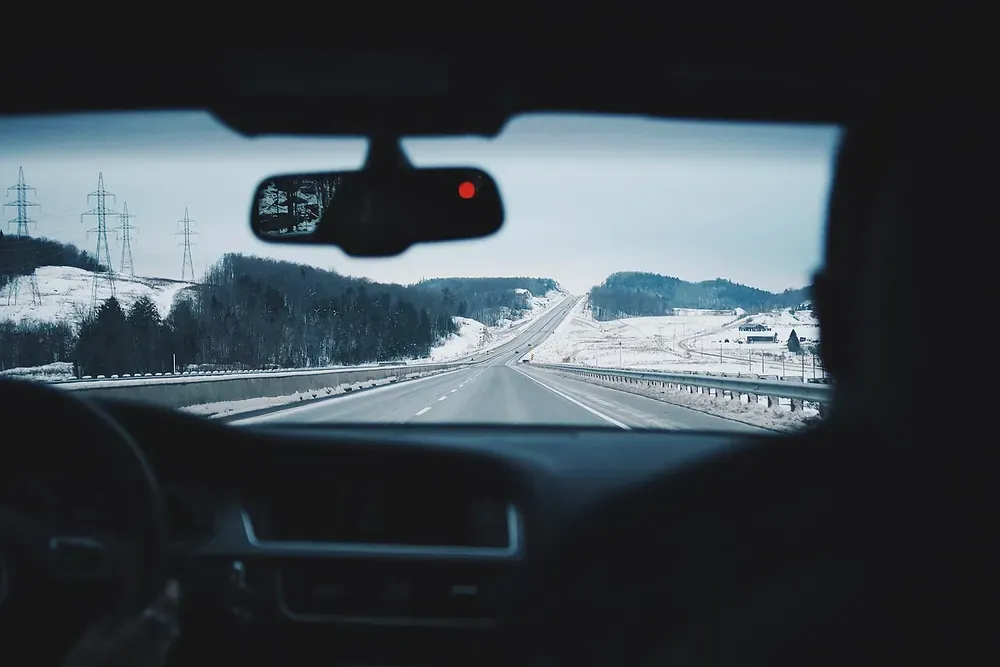 Renters book for trips like this; your page should show the car, the price and how to book straight away. Photo: Oliur Rahman (CC0).
- Fleet filtered by type: 4–5 seats, 7 seats, electric. Each car shows seats, gearbox and fuel.
- Clear daily prices: a Monday–Thursday rate, a weekend rate, a 7-day-plus rate and the deposit for each car.
- Holiday surcharges: list the dates and the extra percentage, so nobody is surprised.
If your car photos are not great yet, see our tips on product photography with your phone: shoot in daylight, from the front corner, with the cabin tidied up.
6. A booking form that totals the price, with delivery
This is what saves you the most messages like “how much is a 7-seater for 3 days?”. A good booking form lets renters:
- Choose the car, pick-up date, return date and pick-up and return times.
- See an estimate that prices each day correctly: weekdays at the weekday rate, Fridays at the weekend rate, 7 days switching to the long-term rate.
- Tick add-ons: hotel or airport delivery, a child seat, a lower-excess cover.
- See the deposit they will pay.
When they tap send, the request reaches your WhatsApp or becomes a row in Google Sheets, with car, dates and total. Say “we confirm availability within 15 minutes”. Stick QR codes linking to your booking page on the dashboard and the counter, and returning renters will book direct.
7. Holiday motorbike rental: routes and free extras
In places like Bali, Phuket, Chiang Mai or Vietnam’s Ha Giang loop, scooter and motorbike rental is a big business with foreign tourists. A motorbike rental site needs a few extras:
 Suggested routes help riders choose the right bike and how many days to rent. Photo: Quangpraha (CC0).
- Bikes grouped by type: semi-automatics that climb well, easy scooters, manual bikes for experienced riders.
- Free extras: helmet, rain suit, lock, phone holder.
- Suggested routes: name, distance, days, difficulty, best season.
- A local driver for visitors who cannot ride, priced per day.
- Prices in dollars or euros for international visitors.
Also create a Google Maps listing so you appear for “scooter rental near me”; see how to add your business to Google Maps.
Build your car rental website for free
You don’t need to hire a web developer. See how to create a free website, or open the car rental template and the motorbike rental template in the free website template library. Change the shop name, photos and prices of each vehicle, deposits, terms and WhatsApp number, and go live in about 5 minutes. The booking form already counts days, weekend rates, long-term rates, holiday surcharges and delivery.
Templates in this article


Frequently asked questions
Do I need a special licence to rent out cars?
Rules differ by country, state and city. Most places require a registered business, commercial insurance and sometimes a local permit. Renting with a driver is often treated differently from self-drive. Check with your local business office before you start.
How much deposit should I take?
Many rental shops take a fixed deposit per car or a hold on a credit card. What matters is writing down the amount, when it is returned and what can be deducted from it.
I only have one or two cars. Do I still need a website?
Yes. Travellers search for "car rental" plus the city name. A page with real photos, daily prices and a booking button brings you customers without relying only on big booking apps or social media groups.
Does the website block the car automatically when someone books?
A simple website does not lock your calendar. Each request arrives by WhatsApp or in Google Sheets; you check the schedule and confirm. Say "we confirm within 15 minutes" so renters know what to expect.
Related articles

Meeting room rental by the hour: take bookings online
Meeting room rental by the hour: list capacity, set time-band prices, take bookings with live totals, weekly bookings, tea breaks and invoices.

How to start a cooking class business with steady bookings
Start a cooking class business from home or your own kitchen: class types, price per person, a weekly timetable, online booking and group deals.

Why Does a Small Business Need a Website? 7 Reasons
Already on Instagram and WhatsApp? 7 reasons a small business still needs a website, plus the cases where you don't need one yet, so you can decide.